Weymouth

Bath

Weymouth

West Bay

Salisbury

West Bay

Bournemouth

Lyme Regis

London
[Click photos for larger versions]
Weymouth
Bath
Weymouth
West Bay
Salisbury
West Bay
Bournemouth
Lyme Regis
London
[Click photos for larger versions]
 |
| [Devil kites, Weymouth - click for larger version] |
 |
| [prints showing borders] |
 |
| [tearsheet - me and Chuck in The Guardian] |
 [pic 2281 - click for larger version]
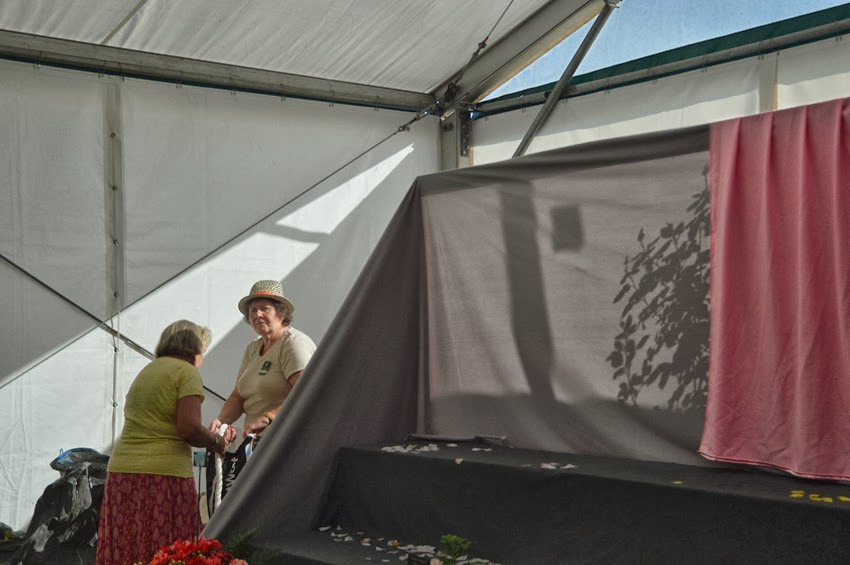
The above photo of bees being removed from Mark Poulton's booth has been quite widely used (e.g. in the Street Photography Now book) but looking back, the whole sequence shown in the complete sequence "contact" sheet makes an interesting little story. The 14 shots making up files nos 2279 to 2292 below span 9 minutes.
 [contact sheet I - click for larger version]
 [contact sheet II - click for larger version]
Three other shots from within the sequence:

[2284 - click for larger version]

[2287 - click for larger version]

[2291 - click for larger version]
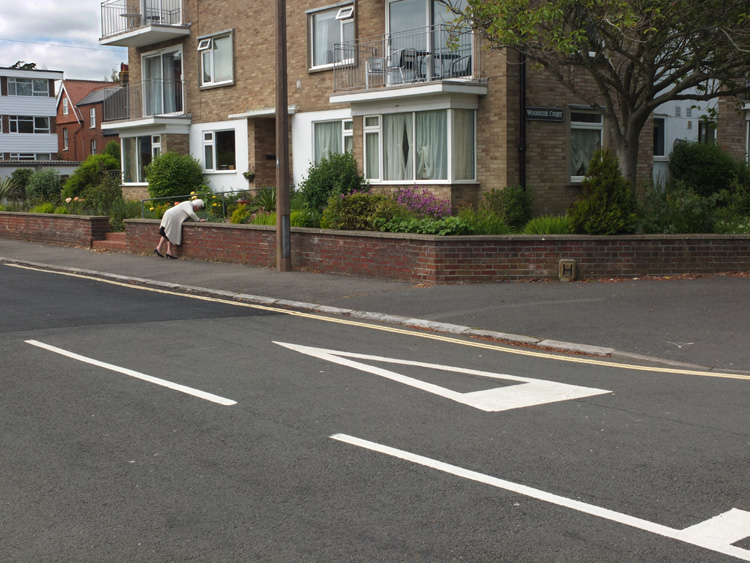
Here's 10 photos I took on Sunday before getting back on the train. Good to see the old place again - a pleasant unexpected stopover.
Click on the pics for larger versions.
[1]

[2]

[3]

[4]

[5]

[6]

[7]

[8]

[9]

[10]


The show runs from 22nd May to 26th June at Snickarbacken 7, and includes 68 photos from all 22 members of the In-Public collective. The collective was founded in 2000, and I was admitted as a member in 2010.

In addition, there will be an In-Public workshop run by Nick Turpin, Matt Stuart and Blake Andrews on 31st May to 2nd June; for details see cupstockholm.com/workshop.html
This show is a collaboration with CUP (Contemporary Urban Photography), a Stockholm-based organization promoting street and urban photography. CUP is also staging an exhibition of 40 prints from five Stockholm street photographers to run in parallel with the In-Public exhibition at the same venue.
The In-Public exhibition is an augmented version of the show that appeared in Derby's excellent FORMAT11 festival.


Bonus photo
I was fortunate enough to meet up with well-known street photographer, Chuck Patch, who was visiting from the US. We did some vaguely tandem shooting, which went better than usual - a great afternoon.

You can follow the project blog here:
http://www.brightonphotoproject.blogspot.co.uk/

[screen shot of a few candidate shots for the Brighton project]
I will continue to blog about non-Brighton related activities here, and hopefully more frequently than recently!
What is it about the street that inspires you so much in your practice?
I’m just a city person. I find the endless array of protagonists, their situations and the myriad variables fascinating; the way you can walk down a street or onto a pier and there will never be that same assemblage of people in that space again. With people included, there will be scenes there you will never see or experience again. That flips my brain a little bit.
What is it that you are looking for whilst out on the street?
Interactions – either between people, or between people and their environment, or both.
How do you shoot? (e.g. from the hip, through viewfinder, what camera, etc.)
I shoot using the viewfinder, and firmly believe that anyone shooting from the hip should be shot. Since going digital, I’ve mainly used a big SLR, the Nikon D70 and then the D90. More recently I’ve been using a small compact, the FujiFilm X10. I just got tired of lugging a big camera around, plus last year I dropped my SLR in a lake (accidentally).
With an SLR, I find it easier to compose precisely but the physical size and conspicuousness of the beast means I’m less likely to raise the camera and take the shot than with a compact. When using a compact I take more shots, but get less keepers because of the difficulty in composing correctly. So, swings and roundabouts.
Do you believe that 'The Decisive Moment' is still relevant?
Yes, it certainly has its place. However I think that a series of pictures consisting of a stream of these becomes a bit much – it needs to be balanced with other types of shots, such as non-moments and shots that establish a sense of place, such as interesting non-peopled shots.
And do you believe that your photos are of a documentary nature? Or are they creating subjective narratives that you see?
My photos are taken quickly and not set up. But even then, a single image doesn’t tell you very much and can mislead, so it’s fun to see how people misinterpret my pictures. Of course, just putting a frame around something excludes everything outside the frame and can change the context.
On top of that, by putting two things together inside a frame you can imply a relationship that doesn’t really exist. So the narrative is definitely subjective. As Joel Sternfeld said, photos “have always been convincing lies”.
Do you associate yourself with the role of 'The Flaneur'?
Yes – even before I got into photography I used to go for long, solitary walks every day. Now, the idea of investigating the city through strolling and observation, Balzac’s “the gastronomy of the eye”, is a key part of my photography. As I understand it, the traditional flaneur found exploring the city a valuable experience in itself, and then maybe wrote about that experience. If you want to turn that into street photography, it’s important to take a camera!
What do you use to help navigate your way through the city? (e.g. The Derive, following a stranger, light, etc.)
I do identify with the idea of the derive – the aimless wander to immerse oneself in the language of the city. For me, it’s important that it really is aimless and that I have the whole day to myself with no plans and no need to look at my watch, apart from checking that I haven’t missed the last train. If I have just one appointment, it hangs over me all day.
I don’t stick in one promising spot waiting for something to happen – I get bored very quickly like that. I generally walk around quite slowly, which seems to make me see better than if I’m dashing around looking for exciting things. I don’t follow particular people (too much like stalking) or seek out good light.
I’ve also found that it’s a good idea to take a few turnings down unpromising streets so that you eventually discover different promising areas, otherwise you can end up in the same old places.
Whose work inspires you in your own?
The usual suspects: Frank’s book The Americans is the touchstone. I also like some Martin Parr, some Winogrand (although not as much as many people), Doisneau, Cartier-Bresson and my colleagues in the In-Public photo collective.